Workshop on Software Industry Entrepreneurship
The Software Engineering Department organized a workshop titled “Entrepreneurship in the Software Industry.”
During the workshop, Dr. Mohammad Abdullah, Director of the University’s Entrepreneurship and Innovation Office and a faculty member in the department, explained the concept of an entrepreneurial idea, how to search for it, its nature, and the principles of entrepreneurial thinking.
In addition, Dr. Wael Al-Zeyadat presented practical methods for transforming an idea into a software product through the application of software engineering methodologies.
At the conclusion of the workshop, a team of volunteer students was formed, comprising those interested in developing their skills, leveraging their ideas, and transforming them into creative entrepreneurial projects.
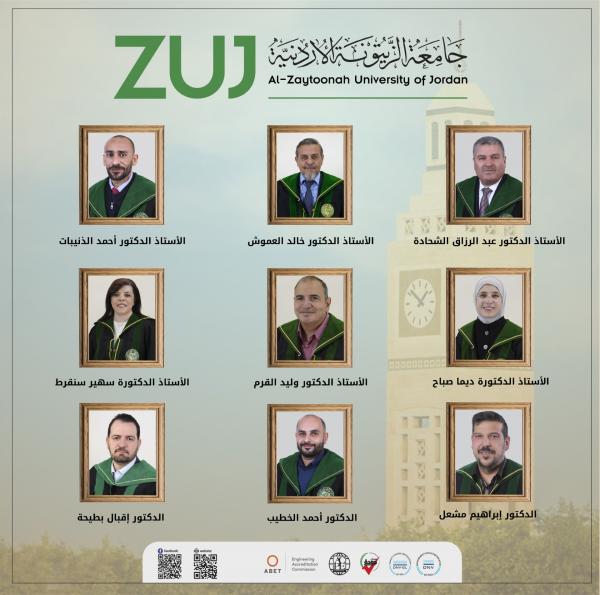
Researchers from Al-Zaytoonah University Ranked Among the World’s Most Influential
Researchers from Al-Zaytoonah University of Jordan have been included in the list of the world’s most influential researchers for 2025, according to the annual global ranking issued by Stanford University in collaboration with Elsevier. This ranking, widely known as the Top 2% of the World’s Most Influential Researchers, highlights scholars whose work has made a significant impact on the global scientific community. According to the ranking, several faculty members from Al-Zaytoonah University were featured in this prestigious list, including:
Prof. Ahmad Al-Thunaibat - Software Engineering. and Dr. Ahmad Al-Khateeb, Dr. Ibrahim Mishal, Dr. Iqbal Batayha, (all from the Faculty of Science and Information Technology)
In addition to: Prof. Abdulrazzaq Al-Shahadeh, Dean of the Faculty of Business, Prof. Khaled Al-Ammoush, Department of Business Intelligence, Prof. Dima Sabah, Prof. Walid Al-Qaram, Prof. Suhair Sanqarat, Faculty of Pharmacy.
This achievement reflects the researchers’ excellence in scientific and academic research and underscores their growing influence within the international scientific community. The ranking is based on rigorous indicators, including the number of scientific citations, the h-index, and other precise research performance metrics.